Archives
- 2026-08
- 2026-07
- 2026-06
- 2026-05
- 2026-04
- 2026-03
- 2026-02
- 2026-01
- 2025-12
- 2025-11
- 2025-10
- 2025-09
- 2025-04
- 2025-03
- 2025-02
- 2025-01
- 2024-12
- 2024-11
- 2024-10
- 2024-09
- 2024-08
- 2024-07
- 2024-06
- 2024-05
- 2024-04
- 2024-03
- 2024-02
- 2024-01
- 2023-12
- 2023-11
- 2023-10
- 2023-09
- 2023-08
- 2023-07
- 2023-06
- 2023-05
- 2023-04
- 2023-03
- 2023-02
- 2023-01
- 2022-12
- 2022-11
- 2022-10
- 2022-09
- 2022-08
- 2022-07
- 2022-06
- 2022-05
- 2022-04
- 2022-03
- 2022-02
- 2022-01
- 2021-12
- 2021-11
- 2021-10
- 2021-09
- 2021-08
- 2021-07
- 2021-06
- 2021-05
- 2021-04
- 2021-03
- 2021-02
- 2021-01
- 2020-12
- 2020-11
- 2020-10
- 2020-09
- 2020-08
- 2020-07
- 2020-06
- 2020-05
- 2020-04
- 2020-03
- 2020-02
- 2020-01
- 2019-12
- 2019-11
- 2019-10
- 2019-09
- 2019-08
- 2019-07
- 2019-06
- 2019-05
- 2019-04
- 2018-11
- 2018-10
- 2018-07
-
br Methods br Results br Discussion
2021-12-01
Methods Results Discussion The aim of this study was to investigate whether serum lectin-binding activity is associated with development of HCC in HCV-positive individuals. Using ELISA-based assays of lectin-binding activity, we demonstrated that both age and gender influence the circulatin
-
br Conclusions br Conflicts of Interest
2021-12-01
Conclusions Conflicts of Interest Introduction Myalgic encephalomyelitis/chronic fatigue syndrome (ME/CFS) is a chronic multisystem illness of unconfirmed cause. ME/CFS has largely been diagnosed from Fukuda CFS criteria and/or the Canadian ME/CFS criteria. The Institute of Medicine in 2015
-
br TGR Agonists br FXR TGR Dual
2021-12-01
TGR5 Agonists FXR/TGR5 Dual Agonists In 2010, a FXR/TGR5 dual agonist, 51 (INT-767), was reported [57]. Using an AlphaScreen coactivator recruitment assay, the potency of 51 at FXR was 30nM. In NCI-H716 cells, 51 stimulated intracellular cAMP secretion with an EC50 of 0.63μM. Its TGR5 potency
-
homoharringtonine br Introduction Over the past two decades
2021-12-01
Introduction Over the past two decades, the prevalence of obesity and obesity-associated metabolic diseases, such as T2D, insulin resistance, atherosclerosis and stroke, have been dramatically increased globally [1], [2], and obesity has been suggested to be the leading cause of the reduced life
-
To determine the functional consequences of HIV gp
2021-12-01
To determine the functional consequences of HIV gp120 binding to vaginal epithelial cells, an annotation clustering of the differentially expressed genes was performed. The top enriched biological processes included an inflammatory immune response, defense response and the pathways included the SODD
-
Conformational changes are observed in the
2021-11-30
Conformational changes are observed in the LBDs after ligand binding, including partial cleft closure for GluN2A and complete cleft closure for GluN1. For GluN2A, additional conformational rearrangements in the protein and ligand may be required before the ligand can be accommodated within lobe 2. F
-
br Declaration of interest br Acknowledgments
2021-11-30

Declaration of interest Acknowledgments This work was supported by grants from the Polish National Science Centre (PRELUDIUM grant no. 2013/11/N/NZ5/00270) and the European Commission FP7 Project Beta-JUDO (grant number 279 153), European Union EIT Health project DeTecT2D, Swedish Diabetes A
-
The glucokinase protein sequence is most
2021-11-30
The glucokinase protein sequence is most closely related to the C-terminal domain of 100kD hexokinases, thus for glucokinase to evolve from a larger hexokinase ancestor it must have lost its N-terminal kinase domain. The genetic mechanism by which this occurred is currently unknown. Here we propose
-
br Conclusions We have shown that
2021-11-30
Conclusions We have shown that despite the development of severe insulin intolerance and marked alterations in whole body substrate oxidation that Gcgr−/− mice are protected against olanzapine-induced hyperglycemia. Our data provides evidence that this protective effect is likely due in large par
-
Our results on the other hand shows that there
2021-11-30
Our results, on the other hand, shows that there is no upregulation of ETBR on the spinal cord after SCI, but there is a significant difference of mRNA on days 2, 7 and 28 on the SCI group on the spinal cord and no changes on the DRG, suggesting that the spinal cord injury may reduce the renovation
-
Histamine modulates an attentional state which
2021-11-30
Histamine modulates an attentional state, which might affect performances in the object recognition test. Indeed, systemic injection of H3 receptor inverse agonists enhances the attentional state (41). However, the memory recovery in our study is unlikely to be due to the enhanced attentional state.
-
The inhibitory activities against HDAC
2021-11-30
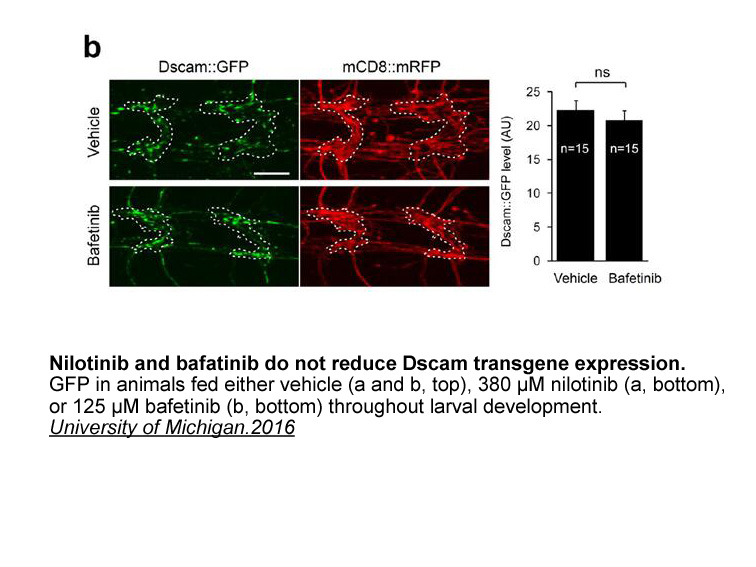
The inhibitory activities against HDAC1 and HDAC6 of title compounds were evaluated in a fluorescent assay using SAHA and ACY-1215 as positive control. The results were displayed in A. Compounds – with linker containing 5–7 carbons showed good inhibitory activities against HDAC6. They also displayed
-
br We are now ready to prove the
2021-11-30
We are now ready to prove the counterpart of Proposition 6.4 for κ-collectionwise normality. This is the pointfree counterpart of the classical result, originally proved in [23], that κ-collectionwise normality is hereditary with respect to -sets. (It may be worth emphasizing that the localic p
-
The following are the supplementary data related to this
2021-11-30
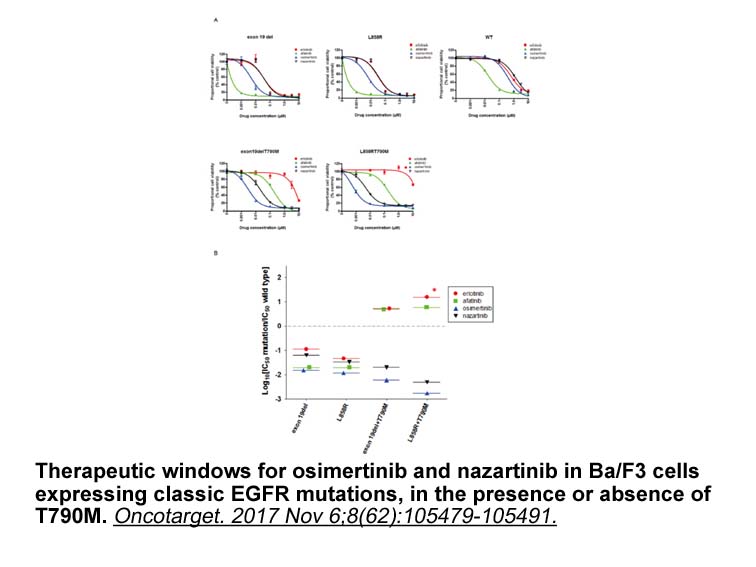
The following are the supplementary data related to this article. Introduction Target therapies have achieved significant gains in the fight against cancer, however, they are still a long way from providing generally curative treatments for the majority of cancers. Targeted agents can be used wi
-
Introduction Epigenetic mechanisms modulate heritable phenot
2021-11-30
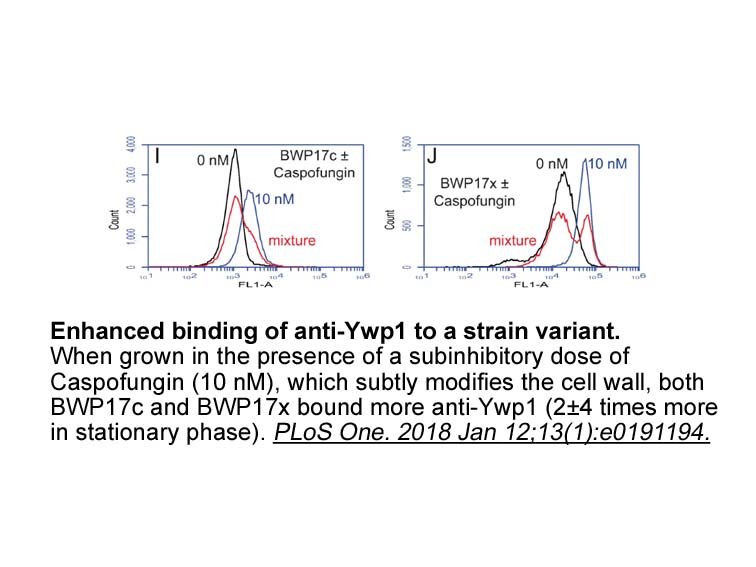
Introduction Epigenetic mechanisms modulate heritable phenotypic changes that are not dictated by changes in DNA sequences. The link between epigenetic modifications and cancer development has been established [1], [2]. Histone modifications represent an important class of epigenetic mechanisms tha
16327 records 546/1089 page Previous Next First page 上5页 546547548549550 下5页 Last page